Flea and tick activity in Augusta peaks from April through November, driven by humid conditions along the Savannah River basin and shaded pine canopies found in Summerville, Forest Hills, and Montclair. Ticks such as…
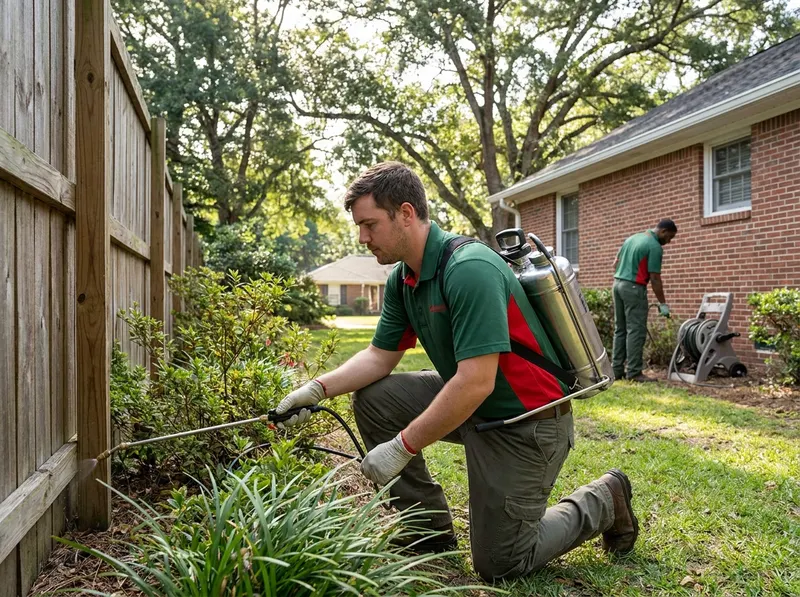
Flea and tick activity in Augusta peaks from April through November, driven by humid conditions along the Savannah River basin and shaded pine canopies found in Summerville, Forest Hills, and Montclair. Ticks such as the lone star tick and blacklegged tick thrive in overgrown margins bordering Lake Olmstead and Pendleton King Park, attaching to passing hosts and vectoring pathogens like Rocky Mountain spotted fever and Lyme disease. Fleas reproduce inside climate-controlled structures, depositing up to 50 microscopic eggs daily per female into carpet fibers, subflooring seams, and upholstered furniture. Hardware store foggers only disperse airborne mist that fails to reach flea larvae buried deep in carpet backing or tick nymphs sheltering beneath pine straw beds. Professional eradication utilizes non-volatile liquid residuals paired with insect growth regulators like pyriproxyfen, which prevent immature larvae from morphing into biting adults while leaving dried surfaces safe for domestic contact once fully cured.
Selecting standalone remediation versus multi-pest programs depends on physical property conditions and host exposure. A single targeted application addresses self-contained infestations stemming from a visiting pet or indoor-only flea outbreak. For properties with mature tree lines, dense shrubbery, or frequent wildlife visits from deer and opossums near National Hills, Barton Village, and Westwood, seasonal dual-barrier suppression creates an outdoor protective perimeter extending 30 feet from the structural foundation. The trade-off between concentrated single visits and recurring barrier applications involves longevity versus upfront cost; single applications neutralize active life stages within 14 days, whereas perimeter suppression prevents reinvasion from wildlife vectors traversing perimeter fences. Exterior treatments target moist, shaded ground cover, organic soil interfaces, and shaded crawl space perimeters around Belair and Sand Hills homes without unnecessarily soaking open, sunlit lawn centers where heat naturally prevents tick survival.
Property preparation determines eradication speed. Vacuuming all rugs, tile joints, and baseboards prior to arrival stimulates flea pupae to emerge from protective cocoons, exposing them directly to the active residual agents. Residents and domestic animals must vacate treated interior spaces for 3 to 4 hours until liquid deposits completely dry. Exterior applications require clearing personal belongings, pet food bowls, and children's toys from turf zones. Standard treatments exclude invasive subterranean wildlife trapping, structural moisture repairs, and direct veterinary topical applications on domestic animals, which require dedicated clinical treatments administered by licensed veterinarians.
Every job gets a firm, written price after a free on-site visit.
Tell us about your flea and tick treatment job in Augusta and we'll send a clear, written quote, usually the same day.
 Merixa Insect Removal