Pest Control Service Augusta addresses active wood-destroying organisms, invasive insects, and health-threatening vermin across Richmond County structures. Technicians evaluate foundations, crawlspaces, and exterior perimeters to stop infestations at their nesting source without mandatory multi-year contract locks.
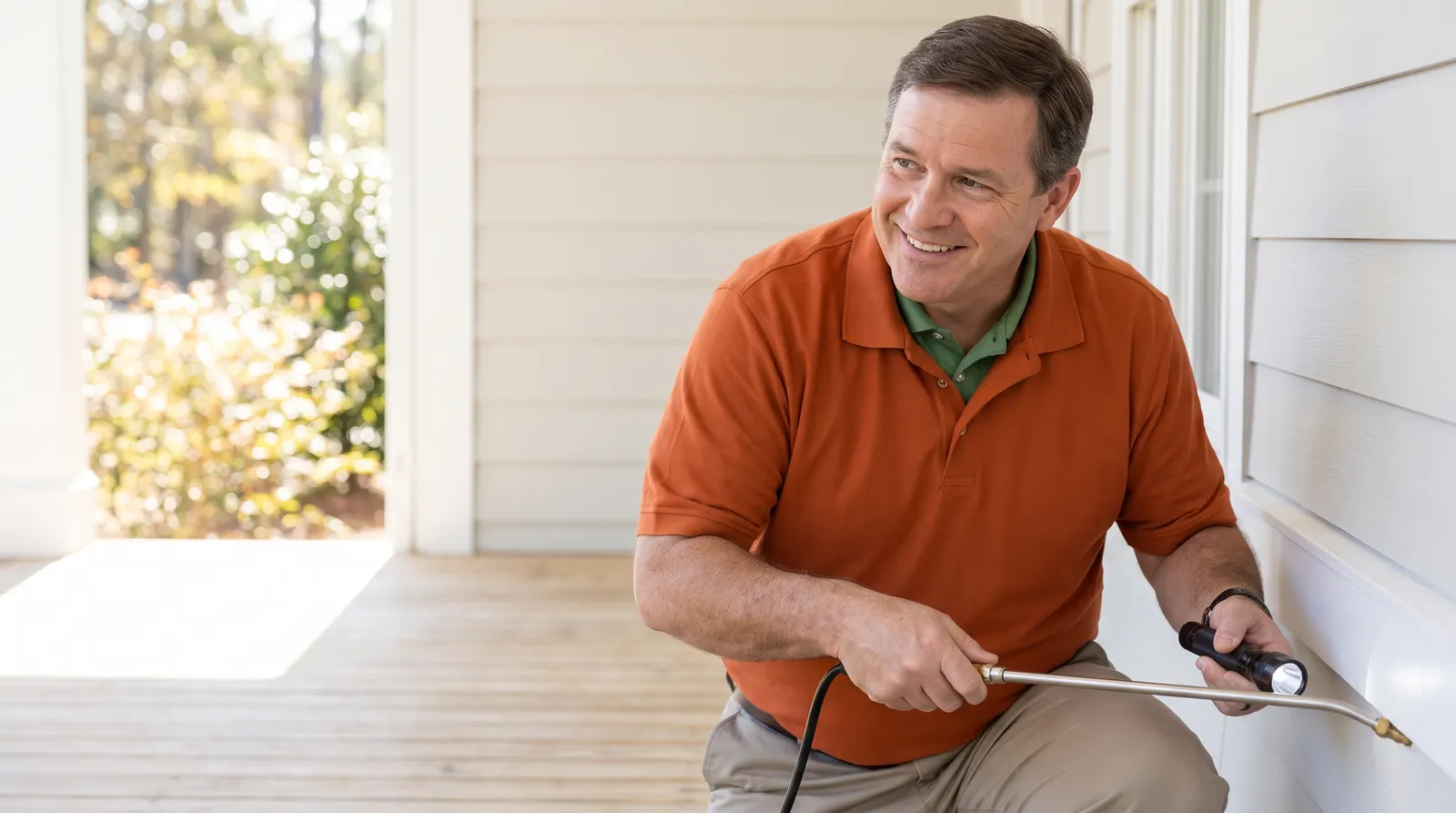
Pest Control Service in Augusta is a specialized biological management and structural extermination discipline that locates active insect colonies, seals entry conduits, and applies targeted botanical or synthetic barriers across residential and commercial properties.
Every service reflects the same meticulous attention to detail, whether it's a single job or a larger pest control service project across Augusta.
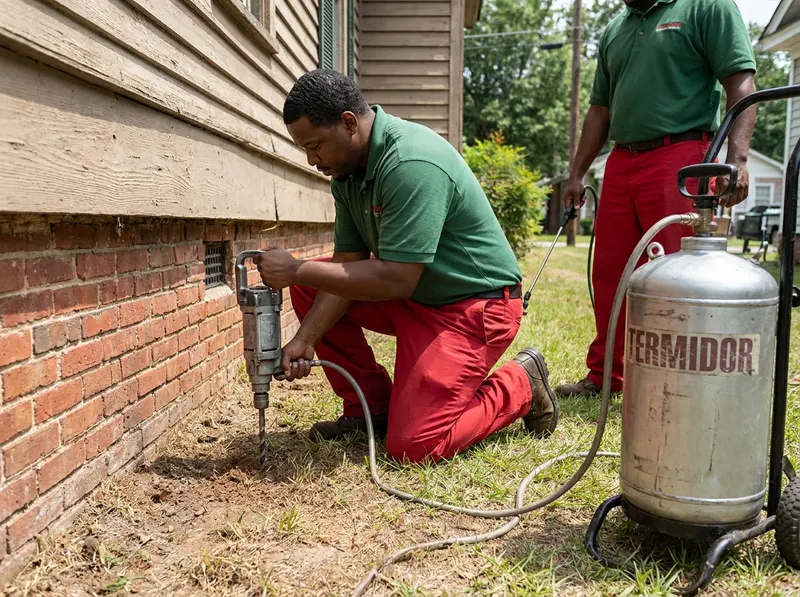
Soil-applied non-repellent liquid termiticides and monitored bait stations eliminate Eastern subterranean termite colonies attacking sills, joists, and structural studs across Richmond County. Technicians trench continuous 6-inch by 6-inch soil channels along perimeter stem walls, injecting 4 gallons of termiticide dilution per 10 linear feet. When slabs prevent direct trenching, precision sub-slab drilling through concrete pads every 12 inches establishes an unbroken chemical barrier. Cellulose bait matrices laced with chitin synthesis inhibitors intercept foraging worker termites, distributing the toxicant through trophallaxis directly to reproductive queens beneath the soil line.
Get a quote →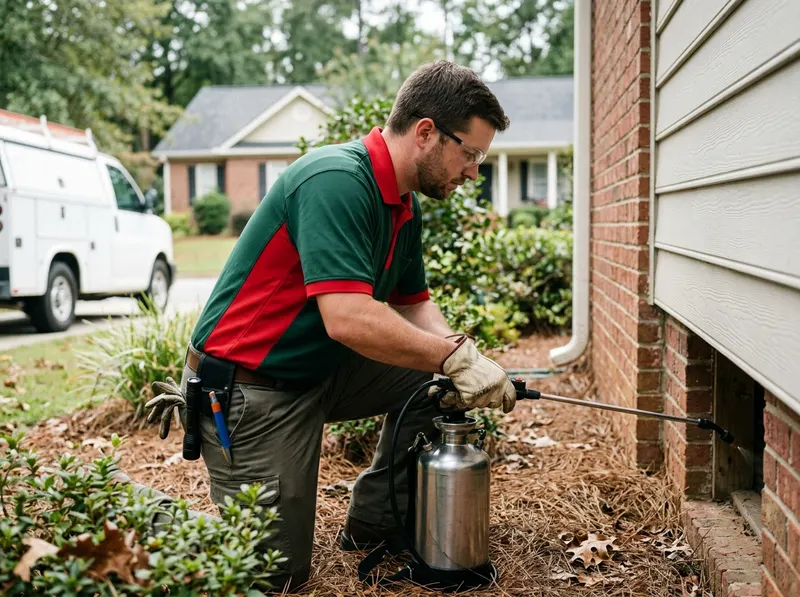
Targeted insect growth regulators, micro-encapsulated suspensions, and precision gel baits eradicate active German, American, and Oriental cockroach infestations in kitchens, basements, and crawlspaces. German cockroaches nesting inside warm appliance motor housings, hinge recesses, and hollow cabinetry receive targeted abamectin and hydramethylnon baits applied in pinpoint placements to eliminate contamination risks. Larger peridomestic American cockroaches entering from sewer lines or weep screeds are contained using synthetic pyrethroid perimeter bands along foundation perimeters, baseboard junctures, and plumbing pipe sleeves.
Get a quote →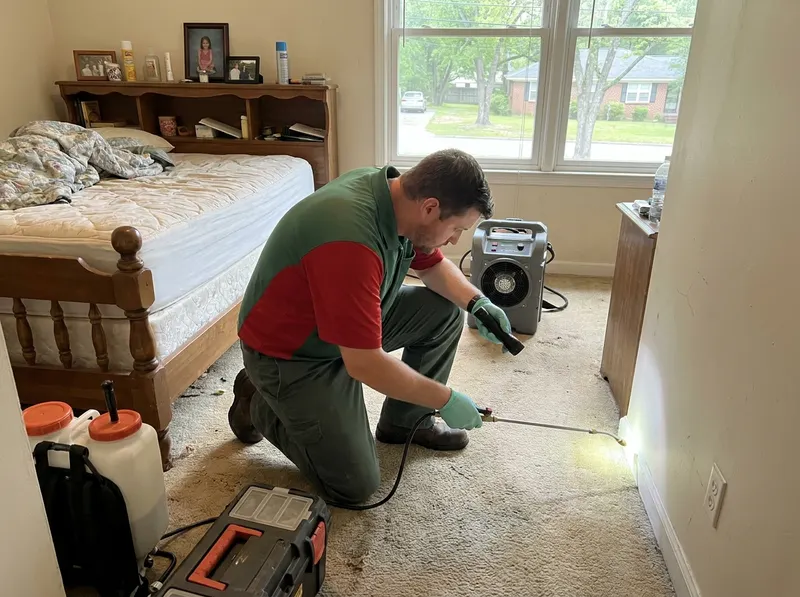
High-temperature contact methods combined with residual dusts in wall voids and outlet frames neutralize bedbug eggs, nymphs, and adults across sleeping quarters. Eradication procedures combine targeted steam applications exceeding 160 degrees Fahrenheit against tufts, seams, and box spring assemblies with amorphous silica aerogel injected into electrical receptacle boxes and wall voids. Insect growth regulators prevent emerging first-instar nymphs from maturing into reproductive adults. Treatments bypass invasive mattress drenching by prioritizing mechanical heat extraction and precise structural containment.
Get a quote →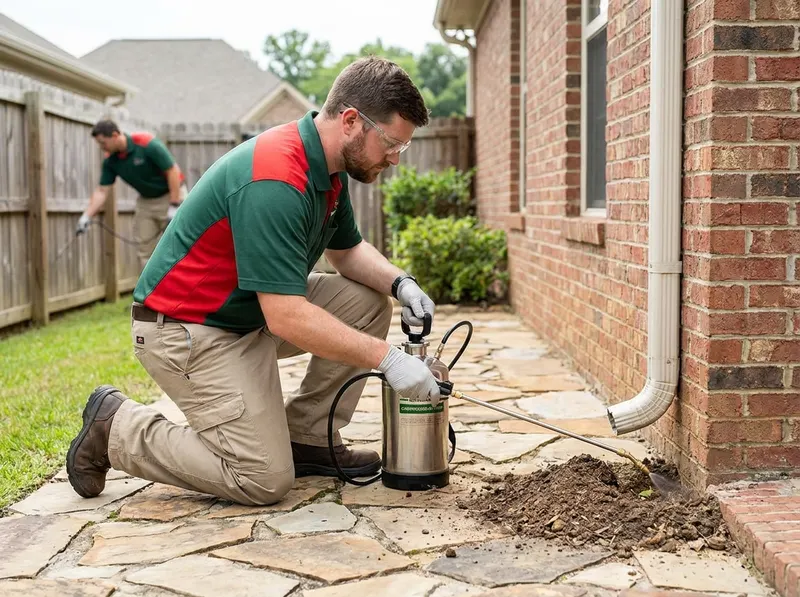
Slow-acting non-repellent bait chemistry allows foraging Argentine, carpenter, and fire ants to carry active ingredients directly to subterranean queens for complete nest mortality. For satellite carpenter ant galleries burrowed inside damp wall framing or window headers, technicians inject specialized drying dusts and foaming agents into void spaces. Argentine ant trails winding through foundation mulch beds are treated with delayed-action liquid borate baits, preventing the sudden worker mortality that triggers colony budding and multi-queen dispersal.
Get a quote →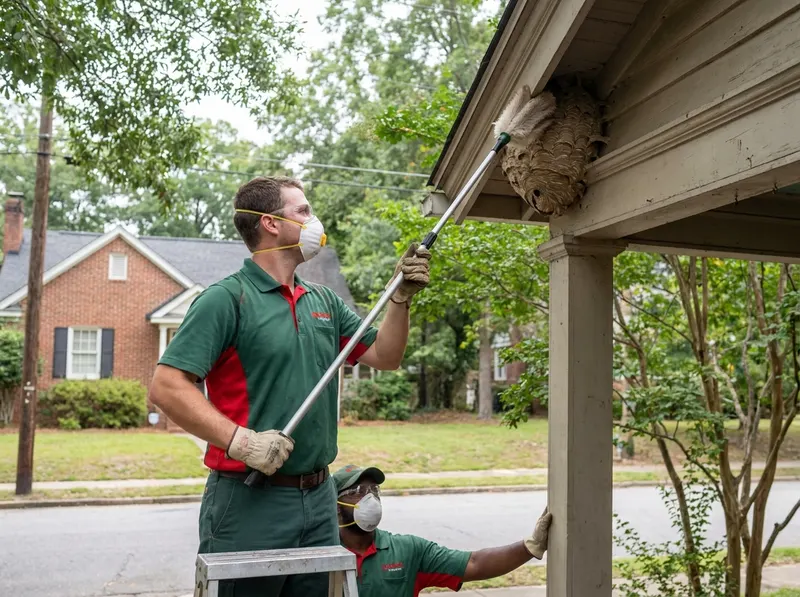
Aerosol freeze agents and physical nest removals clear aggressive paper wasps, yellow jackets, and bald-faced hornets from exterior eaves, soffits, and porch ceilings. High-pressure knock-down pyrethrins instantly disable guard wasps defending exterior combs before technician tools mechanically detach paper carton nests. Cavities inside soffits or brick weep holes harboring yellow jacket colonies are injected with residual micro-fine dusts, neutralizing returning aerial foragers and eliminating defensive stinging hazards around entry doorways.
Get a quote →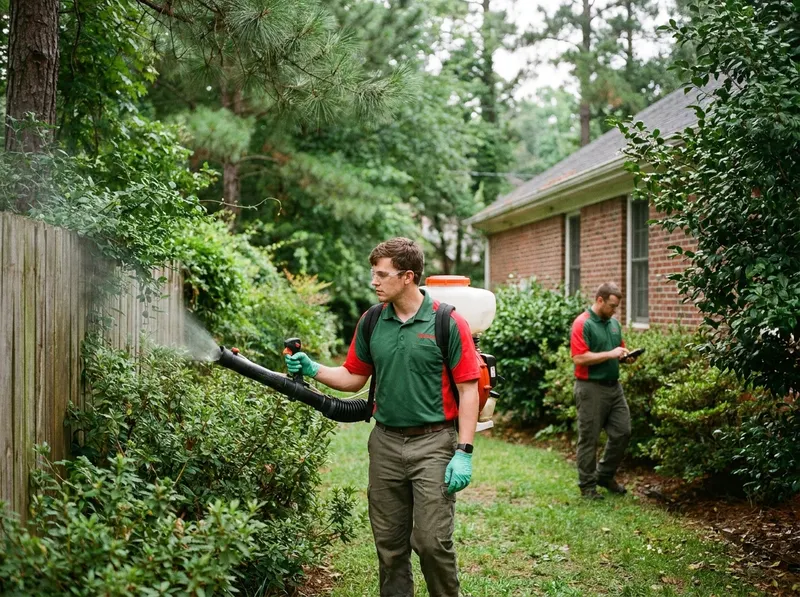
Automated misting applications and biological larvicides target dense shrubbery, standing moisture zones, and shade pockets to suppress adult mosquito populations. Ultra-low-volume micro-sprayers deposit micro-encapsulated adulticides to the undersides of broadleaf foliage where Culex and Asian tiger mosquitoes harbor during midday heat. Standing irrigation basins, clogged drainage swales, and ornamental retention pools are dosed with Bacillus thuringiensis israelensis (Bti) briquettes, dissolving naturally to kill developing wriggler larvae without harming beneficial aquatic life.
Get a quote →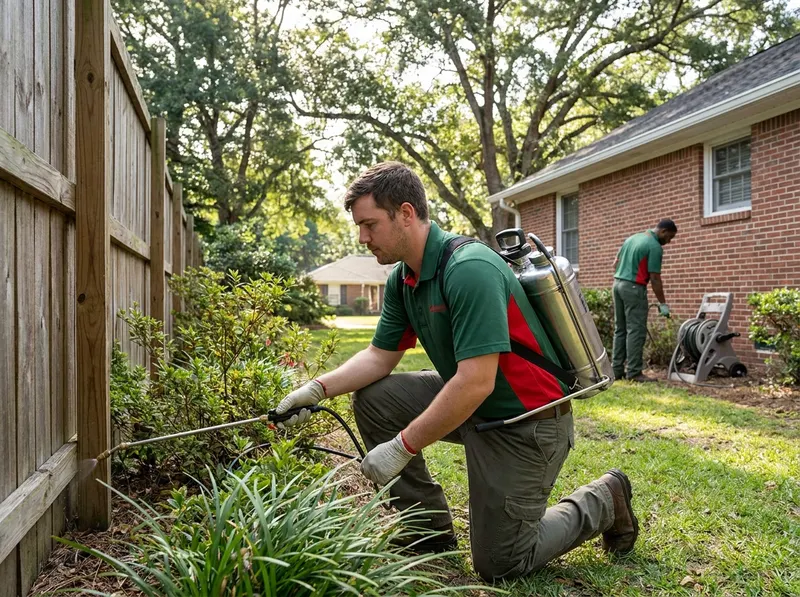
Dual-action adulticides and juvenile hormone mimics eliminate biting fleas and blacklegged ticks embedded in carpets, baseboard voids, and shaded lawn perimeters. Applications saturate deep pile carpeting and sub-furniture perimeters with pyriproxyfen, sterilizing adult females and preventing larval flea pupation. Shaded turf under tree canopies and pine straw beds where animals bed down receive targeted residual sprays that kill deer ticks and brown dog ticks on contact, curtailing vector risks including Lyme disease and spotted fevers.
Get a quote →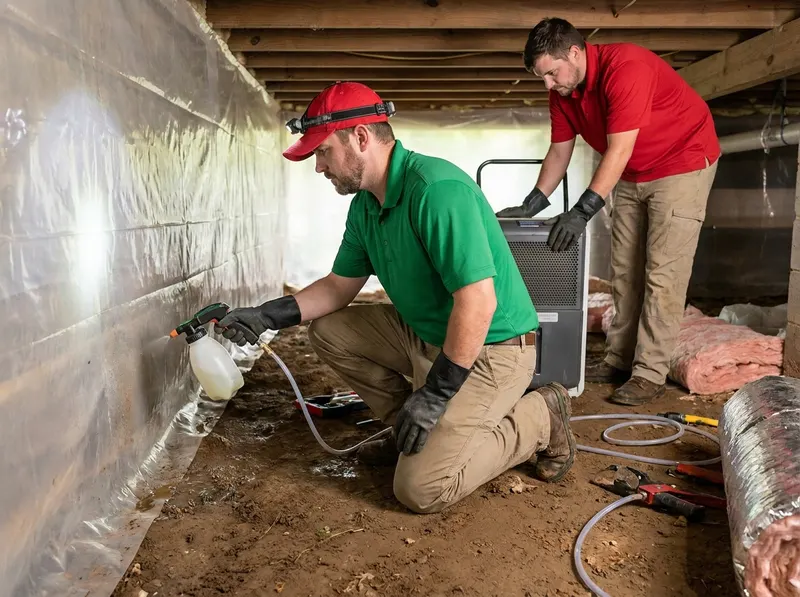
Thick-mil poly vapor retarders and borate wood applications remediate subterranean dampness that invites silverfish, wood-boring beetles, and fungal decay beneath floor joists. Technicians clear biological debris, level crawlspace earth, and overlap heavy-duty 10-mil to 20-mil polyethylene ground liners across bare soil, taping seams securely to foundation piers. Exposed floor joists, subflooring, and sill plates are treated with disodium octaborate tetrahydrate, neutralizing wood-decay fungi and eliminating subterranean termite harborage points.
Get a quote →You get a firm, itemized quote for your pest control service before any work begins, no surprises, no pressure.
Careful prep, tidy work, and a full cleanup when we are done. We treat your home and belongings like our own.
The same trusted, background-checked team from the first call to the final check.
Selecting the correct intervention depends on insect biology, infestation depth, and structural architecture. If a home exhibits localized ant trails, occasional American cockroaches, or spider harborage along exterior eaves, choose a perimeter exterior treatment. If a structure shows mud shelter tubes along stem walls, drywall pinholes, or discarded reproductive wings near window sills, select a dedicated subterranean termite barrier.
The trade-off is mechanical scope and cost: exterior perimeter treatments require brief application intervals starting at $200, whereas subterranean termite interventions demand non-repellent soil trenching or sub-slab injection reaching $950 to $2,400 to achieve structural clearance. If biting insects such as bedbugs establish colonies inside mattresses and baseboard crevices, select targeted insect growth regulator (IGR) heat and crack-and-crevice protocols over surface sprays. The trade-off is intensive room preparation and specialized materials ranging from $450 to $1,200 per affected zone, contrasted against basic residual applications that fail to penetrate unhatched egg casings.
If high crawlspace humidity drives recurring pest migrations, pair targeted bait applications with vapor barrier installation to eliminate root moisture rather than relying solely on chemical reapplications. If a property faces stinging insects like paper wasps or bald-faced hornets nesting high beneath two-story fascia boards, choose direct knockdown foaming combined with mechanical nest scraping. Attempting store-bought aerosol sprays from a ladder introduces fall risks and provokes aggressive swarming attacks without treating the nesting substrate.
For properties adjoining marshlands or densely vegetated creeks near the Augusta Canal, choosing monthly residual foliage mists paired with biological larvicide dunks suppresses adult biting mosquitoes by interrupting breeding cycles in pooled rainwater. Relying solely on plug-in sonic repellers or yard torches leaves larval reservoirs unaffected. When wood-boring powderpost beetles or old house borers target crawlspace floor joists, applying concentrated borate mineral salt penetrants provides permanent structural protection, whereas standard topical surface sprays volatilize quickly in damp air without penetrating the structural heartwood.
Every project gets a firm, written price after a free on-site visit. Ranges below for orientation.
Tell us about your pest control service job and we'll send a clear, written quote, usually the same day. Or just call and talk to a real Augusta pro.
(762) 388-0890
Augusta's subtropical river basin ecology creates severe pest pressures along the Savannah River and adjacent marshlands like Phinizy Swamp Nature Park. In historic Summerville and Forest Hills, mature tree canopies and aging raised-pier foundations trap ambient humidity, allowing Eastern subterranean termites and wood-destroying beetles to move unnoticed into subflooring. Across suburban slabs in Montclair and National Hills, sustained summer heat forces American cockroaches and Argentine ants out of parched pinestraw beds into air-conditioned interior plumbing chases. Moisture retention along the Augusta Canal National Heritage Area and Lake Olmstead fosters dense breeding environments for Asian tiger mosquitoes from April through October, overwhelming standard backyard repellers. Homes situated near Pendleton King Park and Barton Village face heavy ground moisture that destabilizes soil termiticide chemistry faster than inland areas, requiring routine annual inspections and precise soil volume replenishment. Older residences throughout Sand Hills frequently feature unsealed stone crawlspace foundations where temperature differentials pull damp subterranean air upward through the house via the stack effect, carrying dampwood-loving camel crickets, silverfish, and roaches into primary living areas. Properties bordering Belair and Westwood often encounter carpenter ant satellite nesting within decorative landscaping timbers and mature southern red oaks, requiring structural perimeter isolation to stop migration into attic framing.
Free estimates for Augusta & the surrounding area.
 Merixa Insect Removal