Crawlspace moisture defense targets the critical crawl zone beneath Augusta homes, where high relative humidity combines with clay soils to invite wood-decay fungi and subterranean termites. In historic raised-pier…
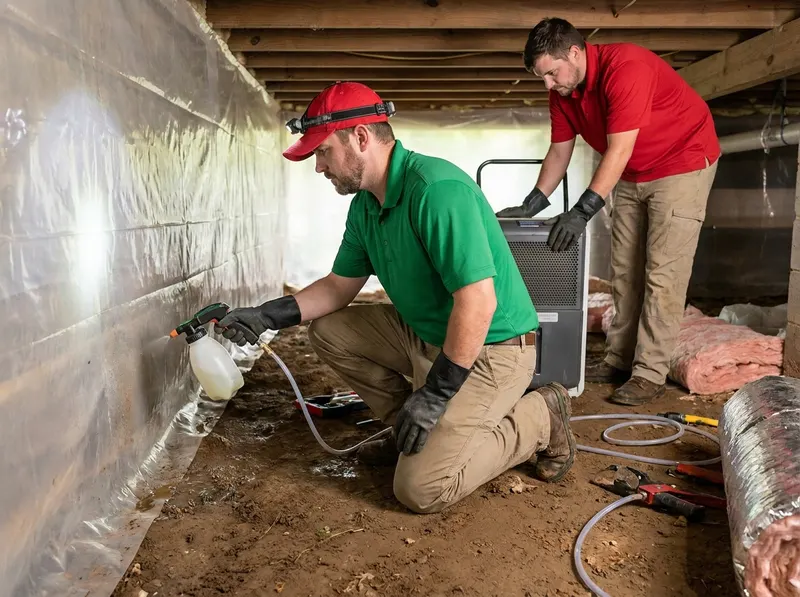
Crawlspace moisture defense targets the critical crawl zone beneath Augusta homes, where high relative humidity combines with clay soils to invite wood-decay fungi and subterranean termites. In historic raised-pier homes around Summerville, Sand Hills, and Barton Village, exposed ground allows water vapor to saturate floor joists, creating wood moisture readings above 19% that attract termites. Modern homes in Montclair, Forest Hills, and National Hills face similar humidity issues near drainage basins and Lake Olmstead, where trapped sub-floor air shelters smokybrown cockroaches and structural-damaging beetles. Placing durable vapor barriers across the soil cuts soil vapor evaporation by up to 90%, preserving sub-floor framing.
A complete defense plan differs from surface hardware-store sprays by eliminating the nesting microclimate rather than applying temporary surface poisons. If a foundation shows only isolated air-vent gaps or localized damp soil near exterior downspouts, a partial 10-mil polyethylene barrier with vent pest-screening resolves the issue. If sub-floor timbers near the Augusta Canal National Heritage Area or Phinizy Swamp Nature Park sustain year-round humidity above 70%, a full 12-to-20-mil sealed barrier paired with structural sill-plate treatments is necessary. The operational trade-off centers on upfront installation investment versus structural repair expenses: partial vapor remediation controls direct soil dampness, whereas full encapsulation creates an isolated structural envelope that halts recurring crawlspace pest colonies permanently.
Defense protocols follow three methodical stages. Step 1 involves an on-site structural moisture audit, measuring joist moisture content and mapping insect penetration tunnels across foundation piers. Step 2 entails ground clearing, soil leveling, and laying heavy-duty ground barriers fastened directly to foundation walls. Step 3 applies targeted insect-specific barriers at floor junctures and installs corrosion-resistant steel mesh across crawl vents. Homes in Westwood and Belair benefit from these targeted barrier integrations, keeping living areas protected from allergen-carrying pests without locking homeowners into unnecessary monthly spray fees.
Every job gets a firm, written price after a free on-site visit.
Tell us about your crawlspace moisture and pest defense job in Augusta and we'll send a clear, written quote, usually the same day.
 Merixa Insect Removal